This is the New Science: An open challenge to the funders of research.

Ten years ago, I started sharing my concern with science agencies and research institutions about a possible scenario so disastrous, it would take at least a generation to recover the public trust.
They didn't want to hear it. Frankly, they couldn't afford to. Now it's real.
On Friday, April 24, President Trump fired every member of the National Science Board at the National Science Foundation, which follows roughly 1,400 cancelled NSF grants and a proposed 50% cut to the agency that underwrites a quarter of all basic research in this country. Not just funding cuts, but attacks on the infrastructure of discovery and innovation:
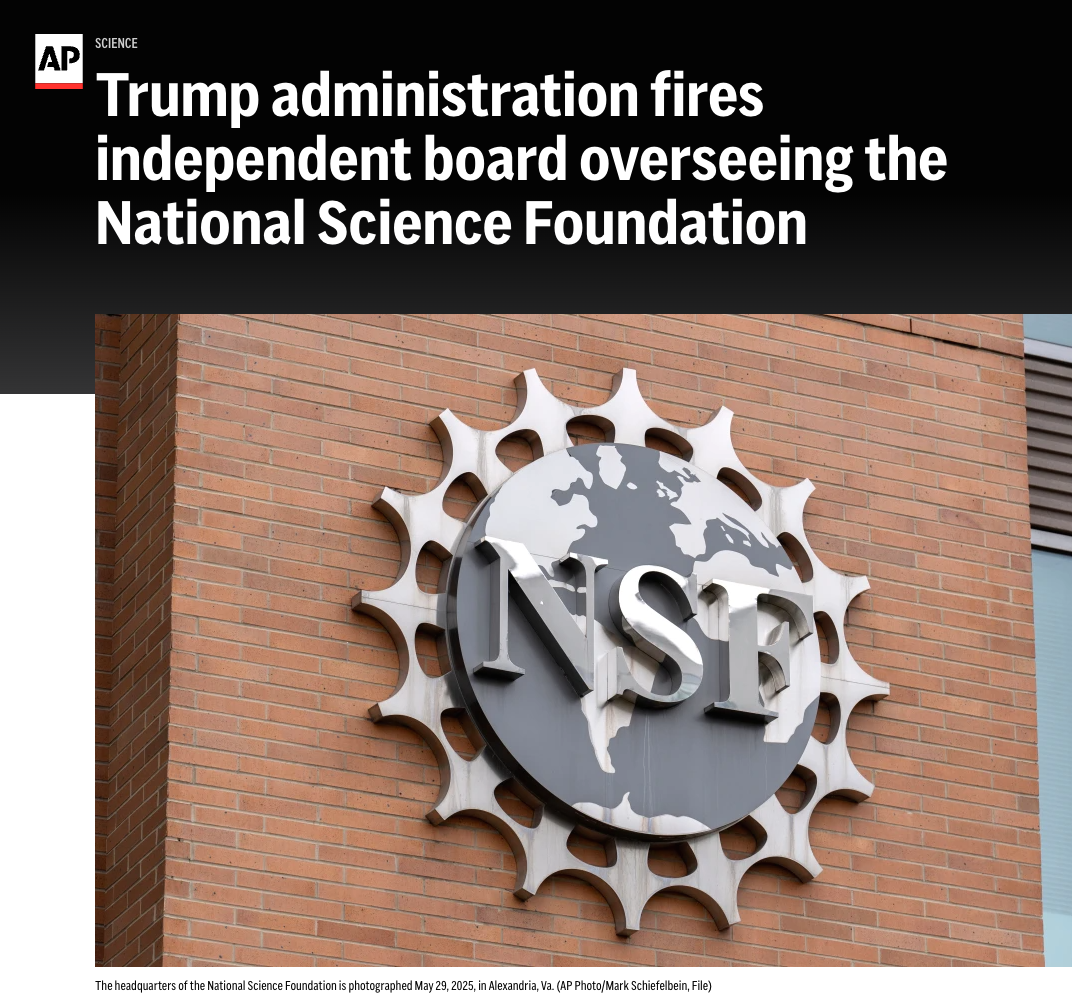
Froze or terminated thousands of NIH and NSF research grants, disrupting biomedical, climate, health, and basic science projects.
Reduced NIH-supported competitive research projects by thousands in fiscal 2025, with particularly sharp drops in some areas such as women’s health research.
Targeted or paused grants connected to politically disfavored topics, including DEI, race, gender, LGBTQ issues, climate, vaccines, HIV/AIDS, mental health, and other public-health research areas.
Canceled more than $100 million in humanities grants through DOGE, which a federal judge ruled unconstitutional and discriminatory.
Sought deep cuts across science-related agencies and programs, including health, environmental, and research functions.
Politicized independent scientific oversight by removing advisory-board members and replacing evidence-based continuity with loyalty-driven governance.
This scenario has been building for many years, and the evidence has been clear if you knew how to make the connections. Anti-elite sentiment, moral judgment, and religious critique were not always overt. Over time, social and political media influencers used these undercurrents to grow their audiences with a shared vision. Today, those audiences have found their champions, sharing the same spaces where they are, and in one hero in particular. The President of the United States.
During this same period, the research community contributed to the cultural momentum working against it. Inadvertently. By assuming its pursuit for the good of humanity would never be challenged, and that the status quo of science communication would hold. Most often, labs only hired from within — experts in science, but not in connecting with or growing public audiences.
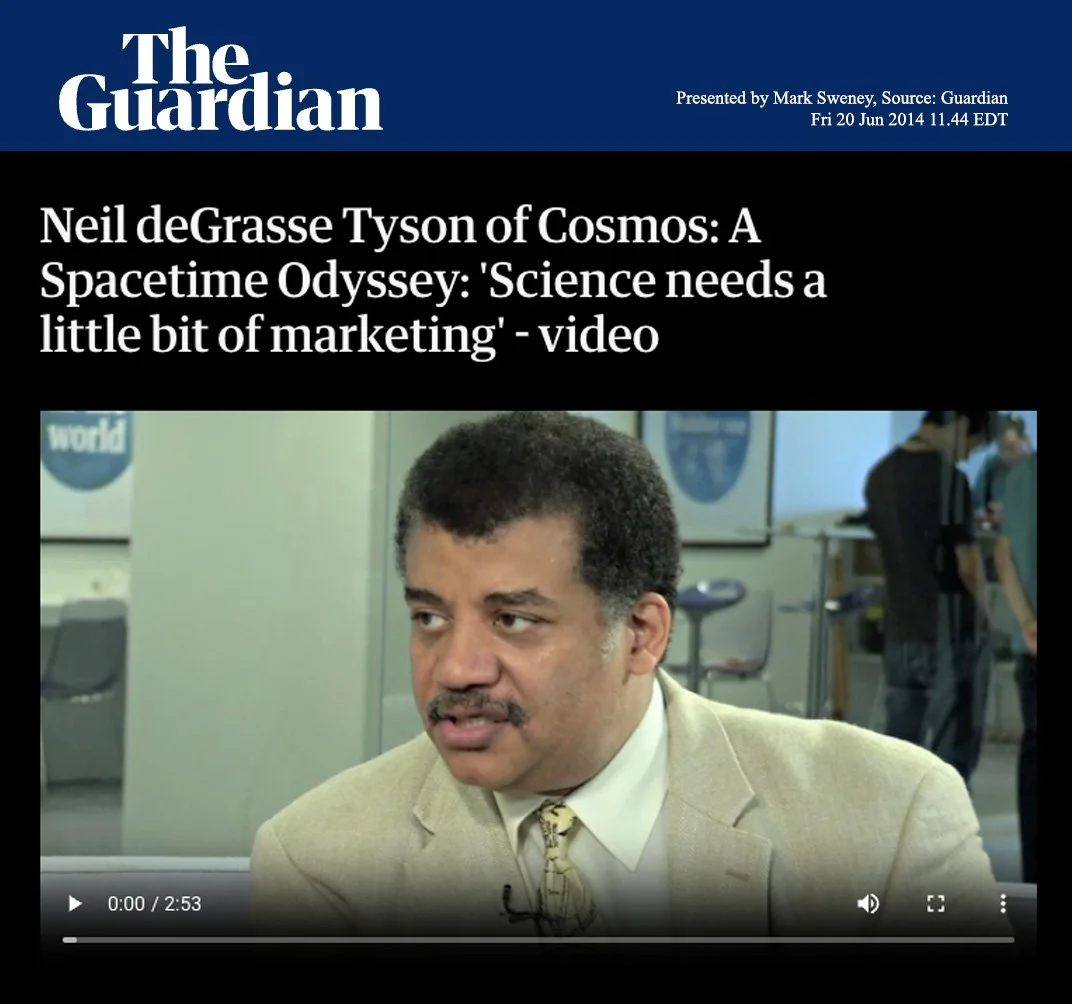
In a 2014 interview with The Guardian, astrophysicist Neil deGrasse Tyson suggested that “science needs a little bit of marketing.” Historically, science has considered itself and its mission above the practice of marketing and advertising. As a result, science communication has been under-staffed, under-budgeted, and under-trained, by the same institutions and funders now watching their work get dismantled.
Scientists hear "marketing" and think "selling,’ but selling is what happens when the marketing isn’t working. Done well, marketing means the audience arrives already aligned, so science never has to sell anything.
Science is experiencing a failure of imagination in real-time, as it’s happening.
It’s counterintuitive to think that communicating science for the public is really not about science. To communicate means to first connect, and with the public that means going to where they are, for their needs and wants, on their preferred media platform. So they can see themselves in it, or else the research doesn't exist.
This moment, this space and time, presents an open challenge to science philanthropy, to deep tech venture firms, and to every foundation or fund investing in research today:
Your support for science is incomplete, even disingenuous, if it is not also funding the infrastructure necessary to protect it.
Breakthrough research needs a breakthrough storytelling experience. People cannot grasp the magnitude of what they risk losing if they are never shown the extraordinary world that science can make a reality for all. That is the purpose of vision.
Without this research, the technology that hasn't been invented yet doesn't get invented. The treatments for diseases your children might face don't exist. The defenses against threats we cannot yet name aren't built. Every breakthrough we count on for the next fifty years is being decided in the labs being defunded today.
And “science communication" is a phrase past its usefulness. Let's just call it communication. Let communicators communicate, let scientists do science, and allow the work between them produce extraordinary experiences the public actually wants.
It is time for the visions of tomorrow to come from research. From the people whose work is to know what's coming, and what it will ask of us. Not science alone. Industry, culture, and policy voices are essential. But a strategic imagination led by a method that learns from being wrong, not the ones that survive by chance. Luck is not vision.
This is the era when imagining the future is as strategic as building it. This is a new science. The only navigator we should trust to guide us through the Imagination Age.
The new science is being built now.
SpacetimeLabs is a narrative R&D studio building this infrastructure with the agencies, foundations, and ventures committed to funding it.
If you're a funder, researcher, or institutional leader who recognizes this moment, we want to hear from you. The work is underway —>